
Fake news! It’s a phrase we have all heard over and over throughout the years, but what does that actually mean?
To grasp a deeper understanding, first we must understand and unpack what fake news is. In modern day, it’s a phrase a former president used any time he heard something he didn’t like. Was the news always fake? No.
So what is real “fake news”? Misinformation, or disinformation. For our purposes, these words will be used interchangeably, but are not necessarily the same thing.
Misinformation is characterized by intentional falsehoods spread as news to advance goals like control, power, money, etc..
According to a NED.org article, Issue Brief: Distinguishing Disinformation From Propaganda, Misinformation, And “Fake News”, “Disinformation is a relatively new word. Most observers trace it back to the Russian word dezinformatsiya, which Soviet planners in the 1950s defined as “dissemination (in the press, on the radio, etc.) of false reports intended to mislead public opinion.””
Now that we understand some of the context and motives behind disinformation, we can try to analyze how we see it today, mainly on social media.
However, misinformation can and will be presented to you through other media formats.
Myself and those immediately around me often find and point out social media misinformation because of our deep journalism backgrounds, but that does not mean that I am safe from misinformation.
Most importantly, my wider community, my network is impacted by misinformation.
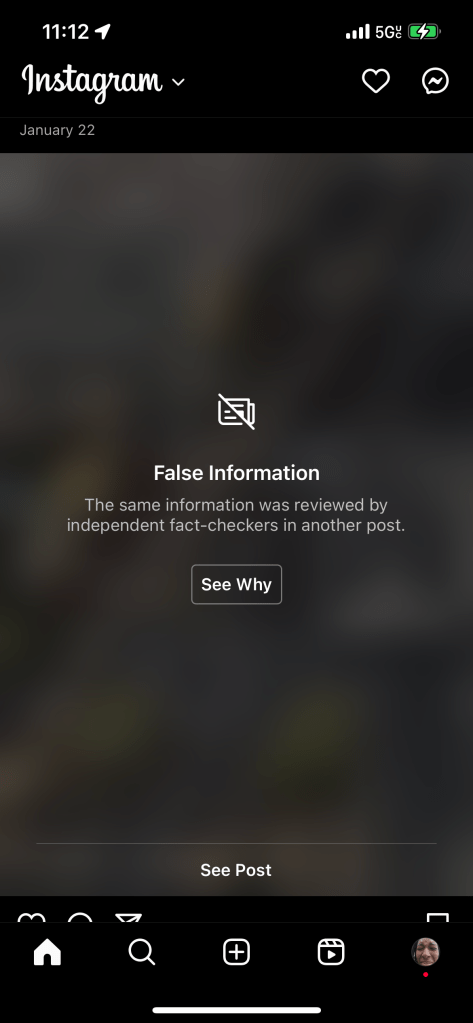
A quick scroll through Instagram, Facebook or even TikTok can present a user with tons of information, not all true.
Let’s take the last week as an example.
Breaking news, major headline– DONALD TRUMP WILL BE ARRESTED TUESDAY.
Now, he was not arrested last week, but that didn’t stop people from using AI to create some version of his arrest.
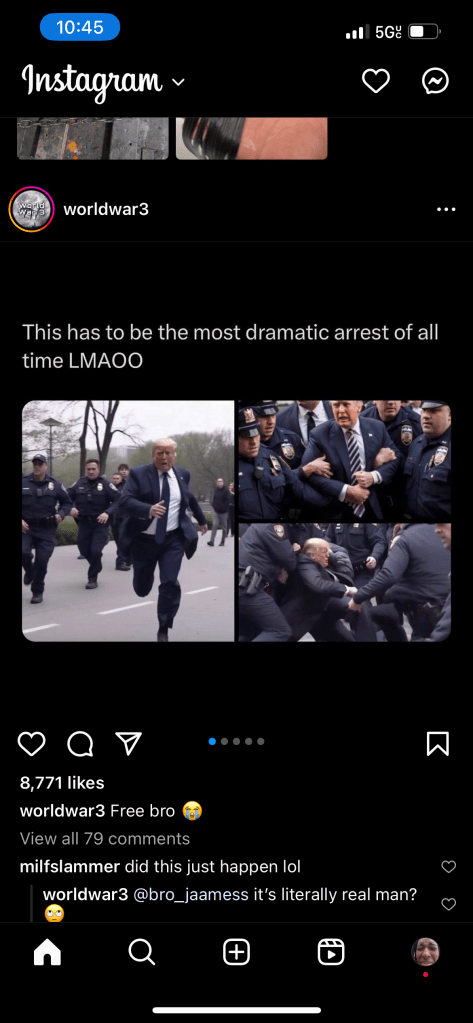
Take notice how these pictures are presented as real, a truth or a fact. Misinformation is evolving, rapidly with the help of artificial intelligence.
There is an ethical responsibility on those who create this type of media, as we have just defined what some of the motives are for disinformation’s creation.
But, what about those who choose to share it?
Some choose to share a post simply because it’s entertaining or interesting.
In the case of the above photo, it was posted by an Instagram meme account, @worldwar3, that has over 700,000 followers.
This account is known for its crude, “shit-posting”.
What does that mean in layman terms?
It is basically shit– stupid, controversial jokes in a meme format that the younger generation usually finds entertaining.
See examples below.

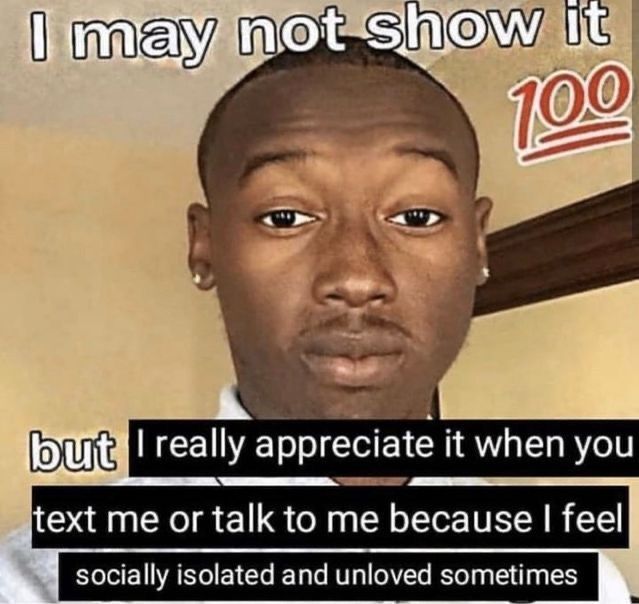
Basically, you don’t have to think much to make the posts nor to enjoy them, which is why it’s called a “shit-post”.
The Donald Trump AI post is for fun and jokes, but it is presented and defended as being real.
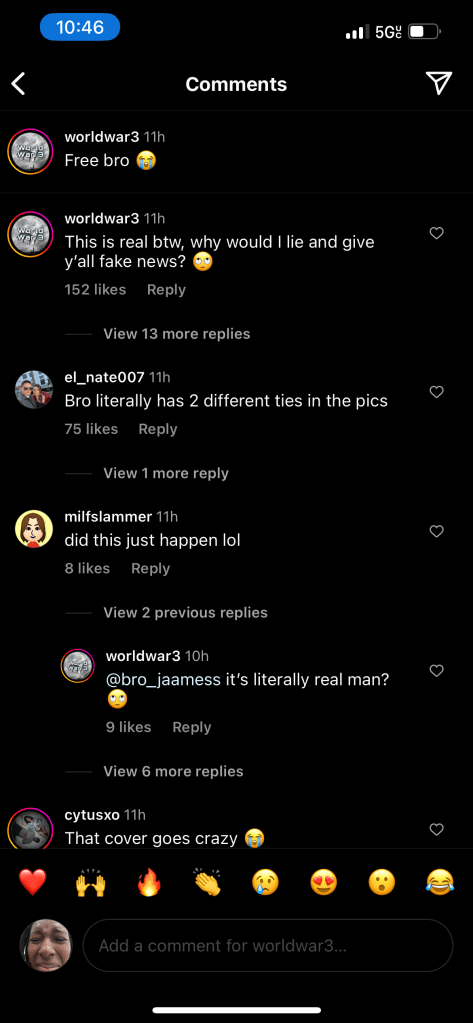
Now, is the owner/user of the account trying to spread misinformation and create harm? I don’t know. I believe that is a question for the account user.
Is the harm still done? Yes.
Note: the post has since been deleted.
As you can see, there is a general confusion in the comments of the post, which is sometimes the goal of misinformation. But, for our purposes, we are looking at entertaining disinformation.
Let’s take a look at another example.

This Twitter user, @yassnito tweets an image of the Pope and Kim Jong Un and says “they’re having an OKAAYYY off”. The follow-up tweet is “the cuntification of regime leaders is so astonishing and surprising to me.. who ever they’re hiring are doing the damn job”.
Now, does this user believe that the Pope is wearing a woman’s puffer coat… again, I don’t know, but it shows the impact that AI and misinformation is having on the younger generation simply because it’s entertaining.
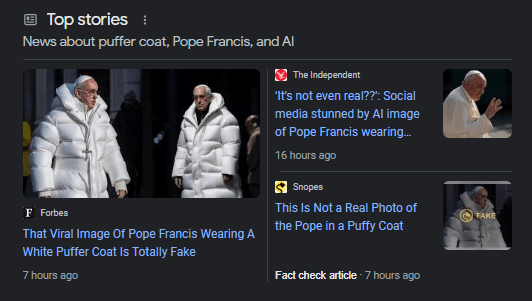
A quick Google image reverse search will tell you that the picture of Pope Francis is not real. It will show you where you can buy a similar coat to the one in the picture.
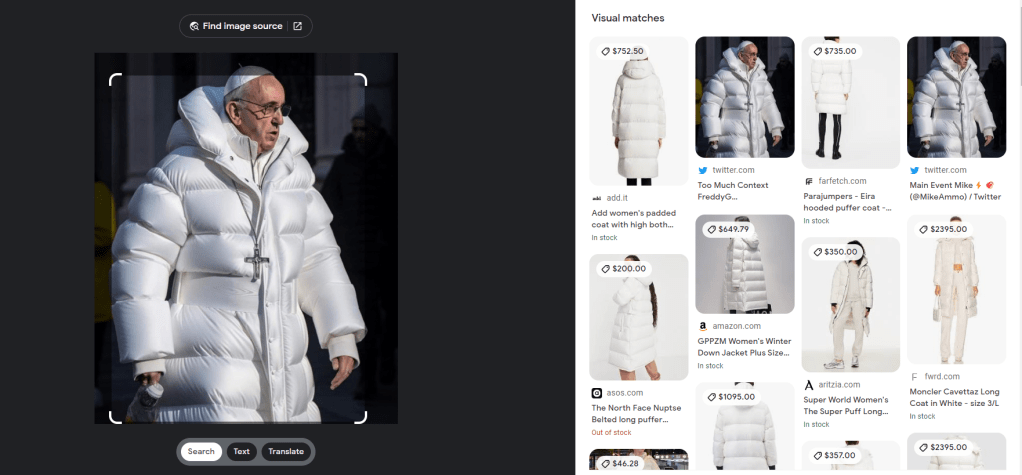
Unfortunately, I saw this image around the same time the Trump ones were circulating, which was several days ago, and news outlets are just now catching onto this fake AI-generated photo.
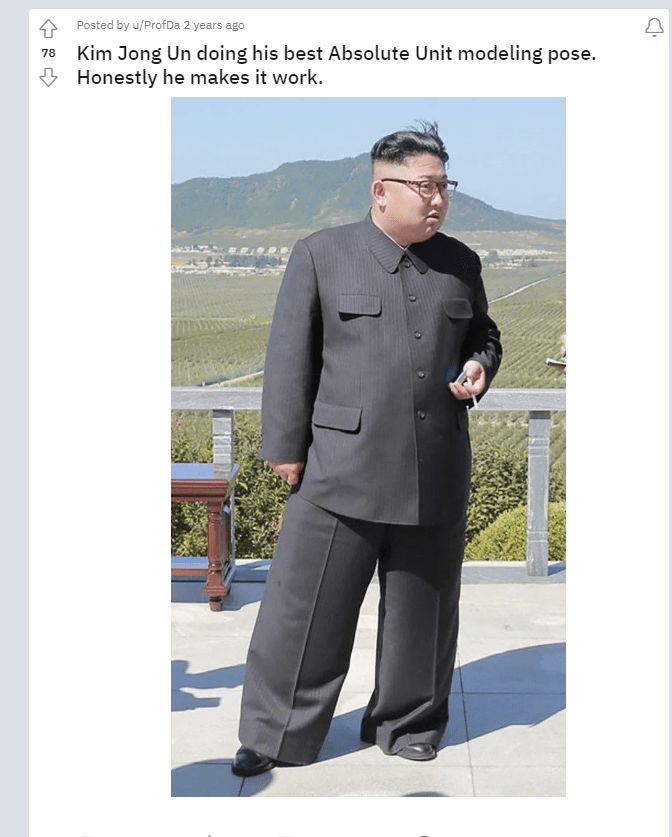
However, the photo of Kim Jong Un is real and I traced it back to a Reddit post from at least two years ago.
As a journalist and someone who will probably always work in the communications field, misinformation heavily weighs on my mind. Before my journalism studies, I believed that most of my peers had the proper media literacy skills, just from existing on the internet for so long– but I have come to realize that disinformation is deliberately made to go over our heads and trick our brains. You have to have a real eye to be able to catch this sort of thing.
If you feel like your eye is not fully trained to spot misinformation, I encourage you to do some research and some readings into how you can spot it.
Or you can keep reading my blog to familiarize yourself with it!
 lydia curry
Leave a comment