
Do you ever have that feeling you’re drowning in your social feeds? Scrolling and scrolling, unsure of what is real and what is fake? With all the content out there, it’s virtually impossible to decipher the real from the fake.
A bold headline from medium.com’s “Distraction Helps Misinformation Spread. Thinking about Accurancy can reduce it,” justifies a lot of what we’re feeling already. Researchers found that being distracted during the processing of information is a key factor that increases the likelihood of people accepting false information as true.
So, it is IMPERATIVE that we think about our mental state when processing information we see online. Misinformation is all about preying on people’s intense emotions of rage, sadness, and anger at the world around them.
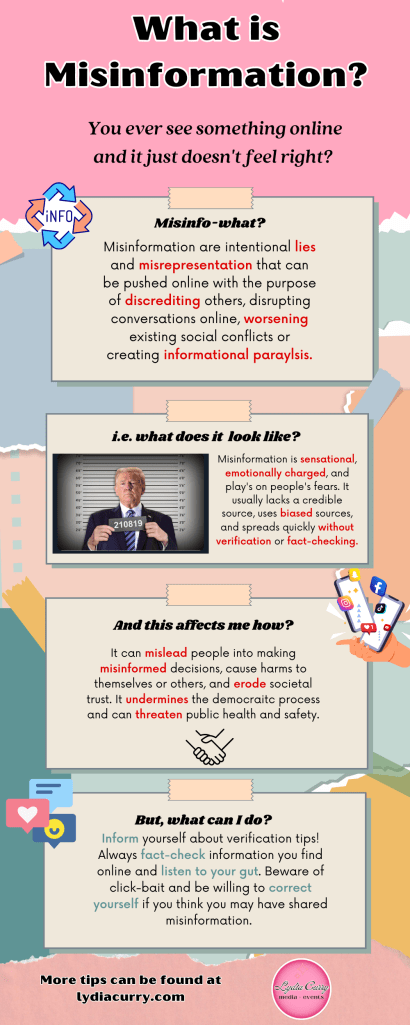
Okay, okay, okay… but what exactly is misinformation? Look no further for your defintion than this fun infographic below!
So, there’s a sneap peek of what you can do about misinformation… want to share with your social pages? Click the button below!
The simple answer to this misinformation problem may seem like we need to create some sort of censorship where these posts aren’t shared or label them as harmself, but that is just a band-aid to this broken, fractured rib of a problem.
This reminds me of a blog post by Dwight Knell for the Inter-American Development Bank (IDB). It says that when the FDA rolled out nutrition labels in 90s, the US didn’t necessarily force everyone to eat healthy but rather provide that information to those who sought it.

In this country, we have access to all sorts of information at our fingertips. While some of us want to know the about the process of creating such information, and feel confidence within fact and truth, others will still choose to consume this information regardless of the author’s intentions, or background, and will choose to stay in the dark, and in lies.
It’s so important for our generation engage in critical thinking and mindful discussions when online. Half of us don’t even think twice when sharing a story or a post online, and if we do something as simple as thinking twice and verifying the source, we’d be stopping this rampant disease from infecting our social timelines and our friend and family’s timelines.
I mean come on… we all have that crazy relative who shares the most OUTRAGEOUS Facebook or Instagram posts. And we think, why would my aunt post something like this? She has a master’s in public health, and yet, believes the COVID-19 vaccine has chips in it that are meant to track everyone.
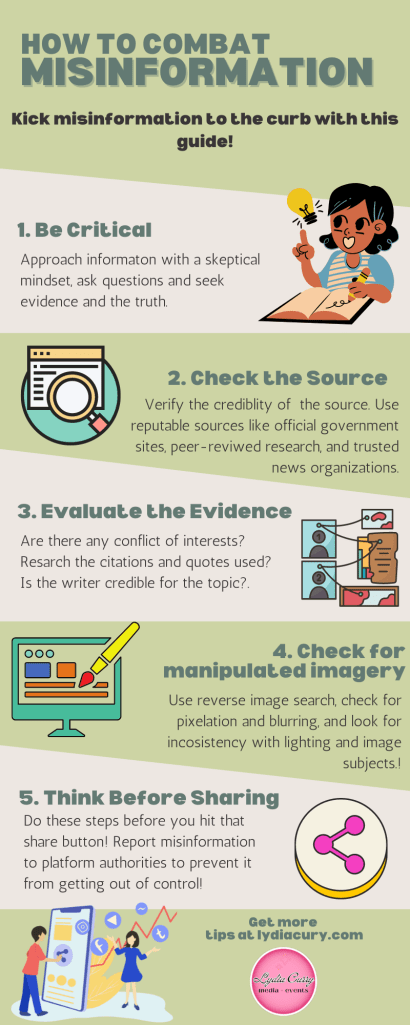
And now your call to action… how can I fight misinformation?
And when this still all feels like too much, take the time to get offline. But, most importantly, choose to “critically ignore” as this article from theconversation.com suggests. The authors of this article remind us that these social media companies and platforms were concieved in greed and sin.
We can’t like every post. We can’t comment on every post. We can’t give every post engagement.
We CANNOT give life to these online bullies of society. We can relieve ourselves of the pressure to be aware of everything, and choose to simply ignore.

 lydia curry
Leave a comment